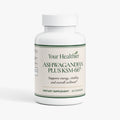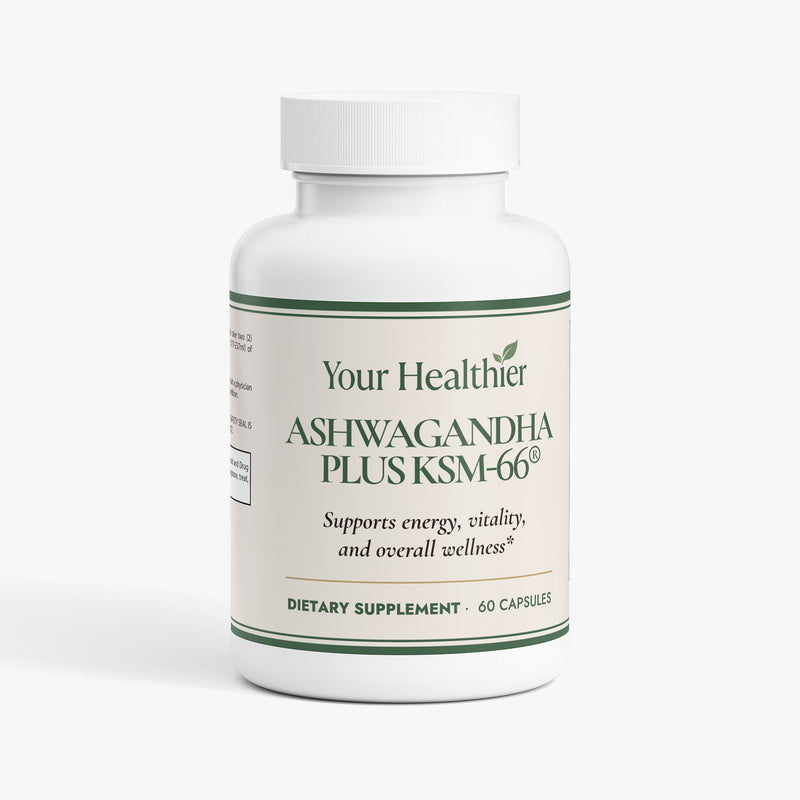
Ashwagandha Plus 600mg
YourHealthier Ashwagandha Plus contains 600mg KSM-66® root extract standardized to 5% withanolides — the most clinically studied ashwagandha extract with 24+ published human trials. Enhanced with L-Arginine, Maca, Panax Ginseng, Shatavari, and Vitamins D3/B6/B12. Supports cortisol regulation, stress resilience, and sleep quality. Third-party tested. Made in USA. 60 capsules (30-day supply).
 ✓ Physician Reviewed
This product page has been independently reviewed for medical accuracy, supplement-drug interactions, and dosage safety by Dr. Jill Palko, MD, FACOG — a board-certified physician and MetroHealth & Cleveland Clinic-trained medical doctor with 12+ years of clinical experience. · Last reviewed
Dr. Palko's Statement: Ashwagandha has shown solid evidence in helping manage the toll of chronic stress. It works by helping keep cortisol levels in check, which is beneficial for those who feel like their nervous system is constantly in high gear.
 ✓ Pharmacist Reviewed
Drug-supplement interactions and product compatibility on this page have been independently reviewed by Angel Rodriguez, PharmD, MS, BCACP — a board-certified ambulatory care pharmacist and clinical pharmacy specialist with 13+ years of pharmacy experience. · Last reviewed
Dr. Rodriguez's Statement: Ashwagandha has a broad pharmacologic profile and may interact with multiple medication classes. Patients on thyroid medications, diabetes drugs, blood pressure medications, CNS depressants, or immunosuppressants should consult their healthcare provider before use. Contraindicated in pregnancy. When combined with Magnesium Glycinate, both have calming effects — consider evening timing. When combined with Berberine, both may lower blood sugar — monitor if sensitive.
 ✓ Medically Reviewed
Health claims on this page have been reviewed by Kelsy Camilo, MS, RDN, CDN — a New York State–licensed Registered Dietitian Nutritionist. · Last reviewed
 💡 RDN Expert Tip
Start it before a stressful period, not during one. Ashwagandha modulates the HPA axis over weeks, so if you know a high-pressure stretch is coming — a big deadline, a move, a difficult season — starting 2–3 weeks ahead puts the cortisol support in place when you actually need it.
600mg KSM-66® Ashwagandha (Withania somnifera) root extract — 5% withanolides — enhanced with a mix of adaptogens (Maca, Panax Ginseng, Shatavari), an amino acid (L-Arginine), and vitamins (D3, B6, B12). That thing where you're exhausted by 3pm but wide awake at midnight? Where your shoulders live somewhere near your ears and your brain won't stop running after the lights go out? Most people blame sleep. It's almost always cortisol — your HPA axis stuck in overdrive, pumping stress hormones at the wrong times, and no amount of melatonin or chamomile tea is going to fix what's happening upstream.*
KSM-66 is a clinically studied ashwagandha extract supported by multiple published human trials. The Chandrasekhar 2012 RCT showed a 27.9% reduction in serum cortisol over 60 days, measured by blood draw, not questionnaire. That's the kind of data that got Dr. Andrew Huberman (Stanford Neurobiology) to discuss it by name. We use the full 600mg dose used in clinical studies, plus Maca Root, Panax Ginseng, Shatavari, L-Arginine, and Vitamins D3, B6, B12 — because chronic stress may drain energy, influence hormones, immune function, and recovery alongside cortisol.*
Why this ashwagandha
- 🧬 KSM-66® — clinically studied branded extract — full-spectrum root extract, 5% withanolides, root-only. The extract used for centuries in Ayurvedic practice and supported by 24+ published human clinical trials. Clinically studied extracts such as KSM-66 and Sensoril provide standardized withanolide content and published research support.
- 💊 600mg per serving — aligned with the dose used in clinical studies — the trials evaluating KSM-66 for stress, sleep, and strength outcomes used 600mg/day, commonly split as 300mg twice daily.
- 🌿 A complete blend of adaptogens, an amino acid, and vitamins — KSM-66 ashwagandha as the foundation, plus Maca Root, Panax Ginseng, and Shatavari (adaptogens), L-Arginine (amino acid), and Vitamins D3, B6, B12 (cofactors). Most ashwagandha products stop at the ashwagandha alone.
- 🔬 Third-party lab tested for purity and potency — heavy metals, microbials, withanolide content. Certificate of Analysis available on request →
- 👩⚕️ RDN review process — product claims reviewed by a licensed Registered Dietitian Nutritionist before publication
- 🏭 GMP-certified USA facility. Vegetarian. Gluten free. No proprietary blends.
Supplement Facts
| Serving Size | 2 Capsules |
| KSM-66® Ashwagandha Extract (5% Withanolides) | 600 mg |
| L-Arginine | 300 mg |
| Maca Root Powder | 150 mg |
| Panax Ginseng Powder | 100 mg |
| Shatavari Powder | 50 mg |
| Vitamin D3 (Cholecalciferol) | 20 mcg |
| Vitamin B12 (Methylcobalamin) | 25 mcg |
| Vitamin B6 (Pyridoxine HCl) | 2.5 mg |
Other Ingredients: HPMC (vegetable capsule).
60 capsules · 30-day supply · Vegetarian · Gluten free · Non-GMO · Allergen-free · Halal
Quick note on the numbers: 600mg is the weight of the KSM-66 extract. The active compounds — withanolides — are standardized at 5%, which means each serving delivers 30mg of withanolides. That 5% is the number that matters for potency. Some brands list higher extract weights but don’t specify withanolide content — without that number, you don’t know how much active compound you’re actually getting.
How to take
2 capsules daily with food. For stress and daytime resilience, take with lunch or in the early afternoon. For sleep, take 1–2 hours before bed. For both, split the dose — 1 morning, 1 evening — which mirrors how most clinical trials dosed it (300mg twice daily).*
On timing: Dr. Huberman suggests afternoon or evening dosing — cortisol is naturally high in the morning and you don't want to blunt that. Clinical trials didn't control for time of day and still worked, but the logic is sound. Start with afternoon and adjust.* Full timing guide →
Third-Party Test Results (Certificate of Analysis)
Lot 5100117 · COA issued 01/16/2026 · Independent lab-verified data for potency, heavy metals & microbiology.
Potency Verification
| Active Ingredient | Per 2 Capsules |
|---|---|
| KSM-66® Ashwagandha Extract (5% Withanolides) | 600 mg |
| L-Arginine | 300 mg |
| Maca Root Powder | 150 mg |
| Panax Ginseng Powder | 100 mg |
| Shatavari Powder | 50 mg |
| Vitamin B12 (Methylcobalamin) | 25 mcg |
| Vitamin D3 (Cholecalciferol) | 20 mcg |
| Vitamin B6 (Pyridoxine HCl) | 2.5 mg |
Heavy Metal Testing
| Metal | Limit | Status |
|---|---|---|
| Lead (Pb) | ≤ 6.0 mcg/serving | ✓ Pass |
| Cadmium (Cd) | ≤ 4.1 mcg/serving | ✓ Pass |
| Mercury (Hg) | ≤ 2.0 mcg/serving | ✓ Pass |
| Arsenic (As) | ≤ 10 mcg/serving | ✓ Pass |
Microbiology Testing
| Test | Specification | Result |
|---|---|---|
| Total Plate Count | < 100,000 cfu/g | ✓ Pass |
| Yeast & Mold | < 10,000 cfu/g | ✓ Pass |
| E. coli | Absent | ✓ Absent |
| Salmonella | Absent | ✓ Absent |
care@yourhealthier.com
What to expect: a realistic timeline
Week 1–2
Adjusting to the adaptogen
Most people don't feel dramatic changes in the first week — that's normal. KSM-66 ashwagandha works by modulating your HPA axis (the stress-response system), and this takes time. Some people report slightly better sleep quality early on. Take consistently with food.*
Month 1–3
Cortisol and stress adaptation
This is where KSM-66 clinical trials show real changes. Salve et al. 2019 (n=60, double-blind) measured significant cortisol reduction at both 250mg and 600mg doses over 8 weeks. Langade et al. 2019 (n=60, double-blind) found significant improvements in sleep quality and onset latency over 10 weeks. Both are branded KSM-66 trials — the same extract in this product.*
Month 3–6
Long-term resilience
With sustained use, ashwagandha supports ongoing stress resilience, healthy energy levels, and balanced mood as part of your wellness routine. Long-term safety data at recommended doses is well-documented. If you plan to cycle off, a gradual taper is reasonable.*
*Individual results vary. Describes general patterns observed in published research, not specific product claims. Consult your healthcare provider for personalized guidance.
What ashwagandha actually does
Cortisol — this is the main event
So what is ashwagandha good for? Chandrasekhar et al. (2012, Indian J Psychological Medicine) ran a 60-day double-blind RCT with KSM-66 at 600mg/day. Serum cortisol dropped 27.9% versus placebo — and that's from a blood draw, not a survey about how people felt. Perceived stress scores dropped 44% on the PSS scale and 72% on the GHQ-28. The same participants reported improved overall well-being, better sleep, and higher productivity.
Why this matters practically: when cortisol stays elevated for weeks or months, it may contribute to disruptions in sleep, body composition, memory, and immune resilience. The stress response itself can become more reactive over time. Ashwagandha works on the HPA axis — the system running the cortisol cascade — and may help support healthy stress regulation upstream. People who take it consistently tend to describe it as the background noise of stress getting quieter.* Full cortisol research →
Sleep quality
Does ashwagandha make you sleepy? Not directly — it supports sleep quality by lowering cortisol rather than through sedation. Langade et al. (2019, Cureus) ran a 10-week trial of KSM-66 in adults with and without sleep difficulties. The ashwagandha group fell asleep faster, slept more soundly, and woke up feeling more alert — all versus placebo. The mechanism isn't sedation. As evening cortisol may come down, the body may shift more easily into relaxation and sleep onset.* Full sleep research →
Strength, recovery, and body composition
Wankhede et al. (2015, JISSN) put men on an 8-week resistance training program with KSM-66 versus placebo. The ashwagandha group reported greater muscle strength on bench press, more lean mass overall, and faster recovery between sessions. Endurance also held up better. Testosterone levels were observed to stay within a healthy range — a pattern consistent with what this controlled clinical trial reported for the ingredient. The findings referenced were observed in a controlled clinical trial.* Does ashwagandha make you gain weight? The research suggests the opposite — Wankhede 2015 showed improved body composition with more lean mass and less fat mass. Ashwagandha is not a weight loss supplement, but it does not cause weight gain.
Stress resilience, cognitive function, and mood
Salve et al. (2019, Cureus) explored the stress findings in a separate 60-day double-blind trial — KSM-66 supported perceived stress measures in otherwise healthy adults dealing with mild chronic stress. Some participants also reported subjective improvements in focus and emotional groundedness. Pratte et al. (2014, JACM) conducted a systematic review pulling together 5 human trials. Multiple studies have explored ashwagandha's potential role in stress-related outcomes.* Cited research describes the ingredient KSM-66 ashwagandha, not this specific product. Individual results vary.
How ashwagandha works: the HPA axis
You take
KSM-66 600mg
Modulates
HPA axis
Result
Cortisol normalizes
🧪 Cortisol
–27.9%
Serum cortisol reduction
Chandrasekhar 2012, 60-day RCT
📊 Evidence base
24+
Published human trials
KSM-66 clinical program
💤 Sleep
10 wk
RCT: improved sleep quality
Langade 2019, Cureus
🧬 Standardization
5%
Withanolide content
Root-only full-spectrum extract
Why an adaptogen isn't the same as a sedative
Three different primary mechanisms. Ashwagandha is associated with HPA-axis cortisol modulation; magnesium with nervous-system calming via GABA pathways; melatonin with sleep-onset signaling.*
Sources: PubMed-indexed research cited above. Describes studies on KSM-66 ashwagandha, not specific product claims.
What a Clinical Pharmacist Says About Ashwagandha
Heather Dickson, PharmD reviews the clinical evidence behind ashwagandha supplementation — what published human studies actually show about stress, cortisol, sleep quality, safety, drug interactions, and who should avoid it. Compensated for research and presentation time. Views and opinions are her own.
The research behind this product
- Pattojoshi A et al. 2026 (Stress) — Randomized, double-blind, placebo-controlled Phase III trial of a standardized Withania somnifera extract for stress and anxiety in adults with hypertension and cardiometabolic risk factors (PubMed)
- West R et al. 2026 (Journal of Medicine and Life) — 8-week, three-arm, double-blind RCT in 141 healthy adults (18–65) with moderate stress; measured change in serum cortisol as the primary endpoint (PubMed)
- Thanawala S et al. 2026 (Medicine) — Double-blind, placebo-controlled, 3-arm RCT comparing 150mg and 300mg sustained-release ashwagandha root extract for stress reduction over 60 days (PubMed)
- Łuszczak J et al. 2026 (Annals of Agricultural and Environmental Medicine) — Systematic review of 24 randomized trials on the adaptogenic effects of Withania somnifera and Rhodiola rosea (PubMed)
- Winther K et al. 2026 (Nutrients) — 2026 clinical review with a specific focus on the safety profile and reported side effects of ashwagandha (PubMed)
- Ferreira JF et al. 2025 (Muscles) — Overview of systematic reviews (151 studies, 9,005 individuals) on ashwagandha's effects on sports performance and health-related outcomes in athletes and healthy adults (PubMed)
KSM-66 vs. other ashwagandha forms
| Form | Source | Withanolides | Clinical research |
|---|---|---|---|
| KSM-66® (this product) | Root only | 5% | YourHealthier found 24+ published human studies |
| Sensoril® | Root + leaf | 10% | YourHealthier found ~12 associated human studies available |
| Shoden® | Root + leaf | 35% | Emerging clinical research available |
| Generic powder | Varies | Unstandardized | Limited clinical research identified |
KSM-66 and Sensoril are both clinically studied branded extracts. KSM-66 follows traditional Ayurvedic practice by using root only (no leaf) and is produced through a proprietary extraction process without alcohol or chemical solvents. Sensoril uses root + leaf and has higher withanolide concentration. Shoden is newer with emerging clinical research. Generic ashwagandha powder is unstandardized and may vary between batches. Full comparison →
Ashwagandha is also available as gummies, liquid, and powder. Do ashwagandha gummies work? They can — but check the withanolide standardization. Most ashwagandha gummies deliver 100–300mg per serving with added sugars versus our 600mg KSM-66 standardized to 5% withanolides. Powder is versatile but harder to dose precisely. We use capsules for consistent delivery of the exact clinically studied dose.
How this stacks up
| Feature | YourHealthier | Typical competitors |
|---|---|---|
| Extract form | KSM-66® (branded, clinically studied) | Many use generic powder or don't specify |
| Dose | 600mg — aligned with clinical trial dose | 300–600mg per serving |
| Formula | KSM-66 + Maca + Ginseng + Shatavari + L-Arginine + D3/B6/B12 | Many are ashwagandha-only |
| Lab testing | Third-party tested, COA on request | Claimed but COAs rarely shared |
| Health claims | RDN review process | No professional oversight |
| Research citations | 5 PubMed-linked studies, named researchers | "Clinically studied" with no links |
Who it's for
People running on cortisol fumes. The ones checking their phone at 6am, grinding through the day on caffeine, then lying in bed at midnight unable to downshift. If the constant tiredness that doesn't match how much you slept sounds familiar, that's the cortisol picture. It's also the guy whose gym recovery has quietly gotten worse and whose vitality isn't what it was three years ago, and the person who downloaded a meditation app, used it for a week, and went right back to baseline.*
If your nervous system needs more than a band-aid and your standard is higher than "it says ashwagandha on the bottle," this is the product we built.
Who should NOT take this
- ❌ Pregnant or breastfeeding — ashwagandha has not been proven safe during pregnancy
- ❌ Children — limited safety data and no established pediatric dose
- ❌ Autoimmune conditions (lupus, RA, Hashimoto's, MS) — ashwagandha can stimulate immune activity, which is the opposite of what you want
- ❌ Thyroid medication (levothyroxine) — ashwagandha may affect thyroid hormone levels; get your doctor's sign-off first
- ❌ Surgery within 2 weeks — may affect blood sugar and blood pressure under anesthesia
- ❌ Immunosuppressant drugs — ashwagandha upregulates immune function, which can interfere
Ashwagandha has a strong safety record in clinical trials lasting 8–12 weeks. The contraindications above are specific and well-documented. If you take prescription medication of any kind, check with your healthcare provider before adding this. Full safety guide →
Side effects
Most people notice nothing negative. GI discomfort can happen if you take it on an empty stomach — easy fix, take with food. Drowsiness is possible in the first few days as your body adjusts — take it in the evening if that happens. Rare reports of vivid dreams. If you're sensitive, start with 1 capsule for the first week.*
One note Dr. Huberman has flagged: he suggests cycling ashwagandha rather than taking it indefinitely at high doses, to avoid excessive cortisol suppression. The clinical trials ran daily for 60–90 days without reported issues, but the cycling logic isn't unreasonable if you're using it long-term. A common approach is 8 weeks on, 2 weeks off.*
Drug Interaction FAQ
PharmD ReviewedCan I take ashwagandha with thyroid medication like levothyroxine?
Ashwagandha may stimulate thyroid hormone production, which could alter your thyroid medication requirements. A clinician may recommend discontinuing ashwagandha rather than adjusting thyroid medication dosing. If you take levothyroxine, methimazole, or any thyroid medication, consult your healthcare provider before use.
Is ashwagandha safe with antidepressants or anxiety medications?
Ashwagandha has calming properties and may enhance sedation when combined with CNS depressants such as benzodiazepines (lorazepam, diazepam, alprazolam), sleep medications (zolpidem, eszopiclone), or alcohol. There is also a theoretical interaction with SSRIs and SNRIs. Consult your healthcare provider before combining.
Can I take ashwagandha with blood pressure or diabetes medications?
Ashwagandha may lower both blood pressure and blood sugar, creating additive effects with blood pressure medications and diabetes drugs such as metformin or insulin. If you are on either type of medication, consult your healthcare provider before use.
Can I take ashwagandha while pregnant?
Ashwagandha is contraindicated during pregnancy due to insufficient safety data and potential abortifacient properties reported in animal studies. Women who are pregnant, planning to become pregnant, or breastfeeding should avoid this product.
Can I take ashwagandha with magnesium or other YourHealthier products?
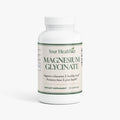
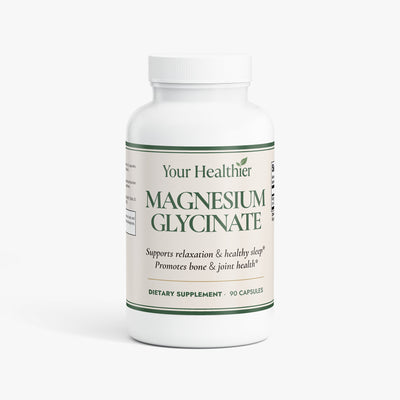
Ashwagandha is safe with all other YourHealthier products. When combined with Magnesium Glycinate, both have calming effects — consider taking ashwagandha in the evening and magnesium at bedtime. When combined with Berberine, both may lower blood sugar — monitor if sensitive.
Reviewed by Angel Rodriguez, PharmD, MS, BCACP · August 2026 · This is general information, not medical advice.
Taking a Prescription Medication or Other Supplements?
Not sure if this product is safe to combine with your current medication or supplement regimen? Email us at care@yourhealthier.com — our pharmacist (PharmD, BCACP) and physician (MD, FACOG) reviewers can provide general safety guidance on potential interactions. We respond within 48 hours. This service is completely free whether or not you purchase our product — because your health matters more than any sale.
This is not medical advice and does not replace consultation with your prescribing physician. Our reviewers provide general supplement safety information only. Always consult your doctor before adding a supplement to your regimen.
Supplement Facts
Usage
Backed by Peer-Reviewed Research
The clinical evidence cited in this product's structured data is fully traceable to peer-reviewed publications. Each study below is independently verifiable on PubMed.
⚕ Research summaries describe what researchers observed in specific study populations. They are not product claims and do not predict individual outcomes. These statements have not been evaluated by the FDA. This product is not intended to diagnose, treat, cure, or prevent any disease.
Cited research describes effects observed in specific study populations under specific protocols. Individual results vary. Citation of clinical research does not constitute disease claims. Editorial policy
Every batch is third-party tested by an independent laboratory against the specifications below. Figures shown are our product specifications and acceptance limits — request the lot-specific Certificate of Analysis for your batch's measured results.
Microbial Safety
Heavy Metals
Active Compounds
Better Together