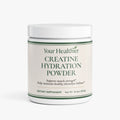
Creatine Hydration Powder
YourHealthier Creatine Hydration Powder provides 5,000mg creatine monohydrate plus electrolytes (magnesium, sodium, potassium) per scoop. The most-studied sports supplement with 500+ published trials supporting muscle performance, cognitive function, and hydration. Made in USA. 30 servings per container.
 ✓ Physician Reviewed
This product page has been independently reviewed for medical accuracy, supplement-drug interactions, and dosage safety by Dr. Jill Palko, MD, FACOG — a board-certified physician and MetroHealth & Cleveland Clinic-trained medical doctor with 12+ years of clinical experience. · Last reviewed
Dr. Palko's Statement: Creatine Hydration Powder pairs a proven 5g dose of creatine with the exact electrolytes needed to stay properly hydrated — delivering evidence-backed performance benefits for both strength and focus without filler ingredients.
 ✓ Pharmacist Reviewed
Drug-supplement interactions and product compatibility on this page have been independently reviewed by Angel Rodriguez, PharmD, MS, BCACP — a board-certified ambulatory care pharmacist and clinical pharmacy specialist with 13+ years of pharmacy experience. · Last reviewed
Dr. Rodriguez's Statement: Creatine monohydrate has an excellent safety profile in healthy adults with no direct drug interactions well documented. The primary consideration is kidney function — patients with pre-existing kidney disease, or those on NSAIDs or diuretics, should consult their healthcare provider. Stay adequately hydrated. Safe to combine with all other YourHealthier products.
 ✓ Nutrition Reviewed
The health claims and ingredient dosing on this page have been independently reviewed for nutritional accuracy, ingredient interactions, and FDA/FTC compliance by Megan DeChatelets, MS, RDN, CDN, IFNCP — a Registered Dietitian Nutritionist and Integrative & Functional Nutrition Certified Practitioner licensed in New York and Texas, with 6+ years of clinical experience. · Last reviewed
Megan's Statement: Timing matters far less than consistency with creatine — take it whenever you’ll actually remember it every day. The one thing I emphasize is mixing it into at least 12–16 oz of water rather than a small sip, since creatine draws water into muscle cells and you want adequate hydration to support that process.
5,000mg creatine monohydrate + 1,000mg sodium + 200mg potassium + 60mg magnesium — one scoop. Creatine monohydrate is the single most researched sports supplement in existence. Over 500 published human trials. The ISSN calls it "one of the most effective nutritional supplements available" for increasing strength, lean mass, and high-intensity exercise capacity. And yet most people still buy a plain tub of creatine monohydrate powder and a separate electrolyte product, paying for two containers when one scoop can do both.*
We combined a full clinical 5g dose of creatine monohydrate with a real electrolyte profile — not the token 50mg sodium sprinkle you see on most "creatine + hydration" labels. 1,000mg sodium, 200mg potassium, 60mg magnesium malate. Creatine pulls water into your muscle cells. Electrolytes replenish what you lose through training and make sure there's actually water and minerals available to pull in. They work together, and most creatine monohydrate supplements ignore that connection. Lemon flavor, smooth dissolve, no loading phase.*
Why This Creatine Monohydrate Powder
- 💪 5,000mg creatine monohydrate — the clinical dose. The form with 500+ human trials. Not HCl, not buffered kre-alkalyn, not a gummy with 1.5g and a prayer.
- ⚡ Real electrolyte doses, not pixie dust — 1,000mg sodium, 200mg potassium, 60mg magnesium malate. Most "creatine + electrolyte" products put in trace amounts for the label claim. Ours replaces what a hard training session actually takes out of you.
- 🔬 Third-party lab tested — potency, heavy metals, microbials. Certificate of Analysis available on request →
- 🏭 Made in a GMP-certified USA facility. No proprietary blends. No artificial colors. Pure creatine monohydrate plus three essential electrolytes — that's the full creatine ingredients list.
- 🍋 Lemon flavor. Smooth mixability. No grit, no clumping, no chalky aftertaste.
Creatine Supplement Facts
| Serving Size | 1 Scoop (10g) |
| Creatine Monohydrate | 5,000 mg |
| Sodium | 1,000 mg |
| Potassium | 200 mg |
| Magnesium (as Magnesium Malate) | 60 mg |
Flavor: Lemon · Net weight: 10.6 oz (300g) · 30 servings · Made in USA · GMP-certified facility · Sugar-free
Creatine Dosage: How to Take
Mix one scoop (10g) with 6–8 oz of water. Once a day — training days and rest days. Pre-workout, post-workout, with breakfast, doesn't matter — creatine works through saturation, not timing. Consistency is what matters. No loading phase needed. At 5g/day you'll reach full muscle saturation in about 3–4 weeks.*
If you train fasted in the morning, taking it post-workout with food works well. If you're over 200 lbs, some researchers suggest going up to 10g/day — that would be two scoops. Full dosage guide →
Third-Party Test Results (Certificate of Analysis)
Lot 5120130 · COA issued 03/04/2026 · Independent lab-verified data for potency, heavy metals & microbiology.
Potency Verification
| Active Ingredient | Per Scoop (10.8g) |
|---|---|
| Creatine (Creatine Monohydrate) | 5,000 mg |
| Sodium (Sea Salt) | 1,000 mg |
| Potassium (Potassium Chloride) | 200 mg |
| Magnesium (Magnesium Malate) | 60 mg |
Heavy Metal Testing
| Metal | Limit | Status |
|---|---|---|
| Lead (Pb) | ≤ 6.0 mcg/serving | ✓ Pass |
| Cadmium (Cd) | ≤ 4.1 mcg/serving | ✓ Pass |
| Mercury (Hg) | ≤ 2.0 mcg/serving | ✓ Pass |
| Arsenic (As) | ≤ 10 mcg/serving | ✓ Pass |
Microbiology Testing
| Test | Specification | Result |
|---|---|---|
| Total Plate Count | < 100,000 cfu/g | ✓ Pass |
| Yeast & Mold | < 10,000 cfu/g | ✓ Pass |
| E. coli | Absent | ✓ Absent |
| Salmonella | Absent | ✓ Absent |
care@yourhealthier.com
What Creatine Monohydrate Actually Does
Note: creatine the supplement is different from creatine kinase (CK), an enzyme measured in blood tests. Elevated creatine kinase levels can indicate muscle damage and should be discussed with your doctor. Taking creatine monohydrate does not meaningfully alter creatine kinase blood test results in healthy individuals at standard doses, though intense exercise can.
ATP and Muscle Performance — The Core Mechanism
Your muscles run on ATP — your body's energy currency. When you sprint, lift, or do anything explosive, ATP gets burned and converted to ADP. Creatine donates a phosphate group to regenerate that ATP — which is why you can squeeze out a couple more reps or hold your sprint speed a beat longer. The Kreider et al. 2017 ISSN position stand — reviewing hundreds of studies — concluded that creatine supplementation at 5g/day increases intramuscular creatine and phosphocreatine stores, which leads to measurable improvements in muscle strength, power output, endurance, and high-intensity exercise capacity.* That conclusion doesn't come from a supplement label. It comes from the international sports nutrition research community after decades of data.
Creatine Brain Health and Cognitive Function
Most people still think of creatine as a gym supplement. The brain angle is newer and less talked about, but the data is real. Your brain uses about 20% of your body's energy, and the phosphocreatine system fuels neurons the same way it fuels muscle fibers. Avgerinos et al. (2018, Experimental Gerontology) ran a systematic review of 6 RCTs and found creatine supplementation supported short-term memory and reasoning, particularly under conditions like sleep deprivation or mental fatigue.* If you eat little or no red meat, the cognitive case for creatine gets even stronger — vegetarians tend to see bigger cognitive benefits from supplementation because their baseline creatine stores are lower.*
What to expect: a realistic timeline
Week 1–2
Muscle creatine loading
Your muscles begin accumulating creatine stores from day one. At a standard daily dose (no loading phase needed), intramuscular creatine gradually rises over the first 2 weeks. You may notice improved hydration and slight weight increase from water retention — this is normal and expected.*
Week 3 – Month 2
Performance gains emerge
After 3–4 weeks of consistent daily use, muscle creatine stores approach saturation. This is when most clinical studies observe measurable improvements in strength output, high-intensity exercise capacity, and recovery between sets. Pair with resistance training for best results.*
Month 2–6
Sustained strength support
Ongoing daily creatine maintains saturated muscle stores and supports consistent training performance. Long-term safety data at recommended doses (3–5g/day) is among the most strong in all of sports nutrition. No cycling needed.*
*Individual results vary. Describes general patterns observed in published research, not specific product claims. Consult your healthcare provider for personalized guidance.
Hydration — Why the Electrolytes Aren't Optional
Creatine is an osmolyte. It draws water into muscle cells, which is part of how it supports performance and cell volumization. But if you're dehydrated or your electrolyte balance is off, there isn't enough fluid to pull in — and that's when people get the bloating and water retention that gives creatine its bad reputation. The sodium, potassium, and magnesium in this creatine hydration powder support proper fluid balance, muscle contraction, and normal muscle function so the water goes where it should: into the muscle cells, not sitting under the skin.* The 1,000mg sodium also replaces what a typical 60-minute training session strips through sweat.
Why Creatine Matters During Caloric Restriction
Whether you're cutting for a competition or losing weight through diet changes, a common problem is losing muscle along with fat. Creatine is one of the few supplements with actual evidence for supporting lean muscle mass and strength during caloric restriction.* If you're restricting calories and want to hold on to what you've built, this is worth paying attention to. Cited research describes the ingredient creatine monohydrate, not this specific product. Individual results vary.
How Creatine Works: The ATP Cycle
You take
Creatine 5g/day
Saturates
Phosphocreatine
Result
Faster ATP regeneration
📊 Evidence base
500+
Published human trials
Most studied supplement ever
💪 Strength
5–15%
Typical strength increase
Kreider 2017, ISSN Position Stand
🧠 Brain
6 RCTs
Short-term memory supported
Avgerinos 2018, systematic review
⚡ Electrolytes
1,260 mg
Total electrolytes per scoop
Na + K + Mg combined
Why creatine monohydrate — not the fancy alternatives
Every ISSN position stand, every major review, every credible sports scientist recommends monohydrate. The alternatives cost more and haven't proven they work better.*
Sources: PubMed-indexed research cited above. Describes studies on the ingredient creatine monohydrate, not specific product claims.
What Researchers Say About Creatine
Dr. Layne Norton (PhD, Nutritional Sciences) on why creatine monohydrate remains the safest, most studied, and most cost-effective sports supplement on the market. Norton is not affiliated with YourHealthier and does not endorse this product.
Published Research on Creatine Monohydrate
- Ben Maaoui K et al. 2026 (Nutrients) — Randomized, placebo-controlled crossover trial in physically active men testing whether creatine timing (before vs during vs after training) affects acute strength and power (PubMed)
- Desai I et al. 2025 (Nutrients) — 13-week RCT in 63 adults assessing creatine monohydrate's effect on lean body mass with and without resistance training (PubMed)
- Lak M et al. 2025 (JISSN) — 12-week RCT in 45 resistance-trained men directly testing whether creatine affects androgen (DHT) levels and hair-follicle health — addressing a common concern (PubMed)
- Marshall S et al. 2026 (Nutrition Reviews) — Systematic review across eight databases examining creatine supplementation and cognition in older adults (55+) (PubMed)
All citations describe published research on the ingredient creatine monohydrate. They do not constitute claims about this specific product. Full studies available on PubMed.
Creatine Monohydrate vs Other Forms
| Form | Evidence | Cost | Verdict |
|---|---|---|---|
| Monohydrate (this product) | 500+ trials | Low | Gold standard |
| Creatine HCl | Limited | Higher | Dissolves better, but no proven advantage |
| Buffered (Kre-Alkalyn) | Minimal | Higher | Marketing claims; Jagim 2012 showed no advantage over monohydrate |
| Creatine Ethyl Ester | Minimal | Higher | Converts to creatinine faster; worse than monohydrate |
Monohydrate is the most researched, most effective, and cheapest form of creatine powder available. The alternatives cost more and haven't proven they work better. Micronized creatine is simply standard creatine monohydrate ground to a finer particle size for better mixing — same molecule, same efficacy, just dissolves more easily in water. Creatine is also sold as gummies, pills, and capsules. Creatine gummies are convenient but usually deliver less than 5g per serving and often add sugar — you'd need several to match one scoop of powder. Creatine pills and capsules work but require swallowing multiple to reach an effective 5g dose. Powder remains the most cost-effective way to hit the clinically studied 5g. Full comparison →
YourHealthier Creatine vs Other Creatine Supplements
| Feature | YourHealthier | Typical competitors |
|---|---|---|
| Creatine dose | 5,000mg monohydrate | 3,000–5,000mg (some underdose at 3g) |
| Sodium | 1,000mg | 50–500mg (most are token amounts) |
| Potassium | 200mg | Often missing entirely |
| Magnesium | 60mg (malate form) | Oxide if included at all |
| Lab testing | Third-party tested, COA on request | "Third-party tested" with no COA shared |
| Artificial colors/sweeteners | None | Most flavored products use sucralose + dyes |
Who Should Take Creatine
If you train — weights, HIIT, team sports, whatever involves high output — creatine is the single most evidence-backed supplement you can add. But the audience is wider than the gym crowd now. Creatine for women is equally supported by the research, and the bloating concern is a hydration problem, not a creatine problem. If you're over 40 and noticing your strength isn't where it used to be, this has actual evidence behind it. Same goes for vegetarians and vegans who aren't getting creatine from food at all — you're missing both the physical and cognitive upside.*
If you already take creatine powder and a separate electrolyte product, this replaces both — it's the best creatine monohydrate option for people who want both in one scoop. If you've never tried a creatine monohydrate supplement because the bloating scared you off, the electrolyte pairing here is designed to support hydration at the same time — which is exactly the combination that makes bloating a non-issue.
Who Should NOT Take Creatine
- ❌ If your doctor has advised you to restrict protein metabolites or monitor kidney function — creatine is safe for healthy kidneys (Kreider 2017 confirmed this), but if you have an existing condition affecting kidney function, consult your physician first
- ❌ Under 18 without physician guidance — not because it's unsafe, but because the long-term data in adolescents is thinner
- ❌ Pregnant or breastfeeding — creatine is not recommended during pregnancy or breastfeeding due to lack of conclusive safety research in these populations
- ❌ Currently taking prescription medications that affect mineral or fluid balance — check with your doctor given the electrolyte content
The kidney concern needs context. Kreider's 2017 ISSN review specifically addressed this: creatine monohydrate at recommended doses does not harm healthy kidneys. Creatinine (the byproduct) goes up on blood tests, which sometimes gets flagged — but that's a measurement artifact, not damage. If you have a diagnosed kidney condition, check with your doctor first. Full safety review →
Creatine Side Effects
Weight gain of 1–3 lbs in the first week or two from water being pulled into muscle cells. That's not fat — it's intracellular hydration, and it's part of how creatine works. Some people get mild GI discomfort if they take it on an empty stomach or don't drink enough water. The electrolytes in this formula help with both of those issues.* Creatine does not cause hair loss — the single study people point to (van der Merwe et al. 2009) measured DHT in rugby players and has never been replicated.
Creatine Supplement Stacks: What Pairs Well
- Ashwagandha KSM-66 — Covers the stress and recovery side that creatine doesn't touch. Wankhede 2015 studied KSM-66 alongside resistance training and found the combination supported strength gains beyond either alone. Details →
- Magnesium Glycinate — The 60mg magnesium malate in this formula covers training-day needs, but if sleep is also a priority, adding 275mg of bisglycinate before bed fills the gap. Details →
- Berberine — If you're doing a body recomposition — losing fat while trying to hold muscle — creatine supports the lean mass side while berberine works on metabolic pathways through AMPK activation. Different levers, same goal. Details →
- NMN — Completely different energy pathways that don't overlap at all. Creatine feeds the phosphocreatine system for explosive output; NMN supports NAD+ on the mitochondrial side. A good pairing if you're thinking about both performance now and cellular health long-term.
Creatine Monohydrate FAQ
Do I need a loading phase?
No. Loading (20g/day for 5–7 days) saturates muscles faster, but 5g/day gets you to the same place in 3–4 weeks with no GI issues. Just take it every day.*
When should I take creatine?
Doesn't matter. Creatine works by saturating your muscle stores over time, not by hitting a timing window. Take it whenever you'll remember to take it every day. Some people prefer post-workout with a meal because the insulin response may slightly improve uptake, but the difference is marginal.* Full dosage guide →
Will creatine make me bloated?
The initial water weight (1–3 lbs) goes into your muscle cells, not under your skin. That's intracellular hydration, which is a good thing. Bloating usually happens when people take creatine without enough water or electrolytes — which is exactly why this formula includes both. Drink your water, take the scoop, and the bloating concern goes away.*
Does creatine cause hair loss?
One single study (van der Merwe 2009) found elevated DHT in rugby players taking creatine. It's never been replicated, and no study has directly linked creatine to hair loss. The ISSN position stand does not list hair loss as a side effect.
Is creatine safe for women?
Yes. Creatine side effects for females are the same as for males — the research applies equally to both men and women. A 2021 review in Nutrients (Roschel et al.) specifically looked at creatine across the lifespan, including women's health. Creatine for women won't cause "bulk" — what it does is support lean muscle, with the cognitive and recovery benefits on top. The science has been there the whole time.*
Is creatine safe for kidneys?
Yes, in healthy individuals.* The Kreider 2017 ISSN review covered this extensively — no evidence of harm at recommended doses. Creatinine (a byproduct) shows up elevated on blood tests, which can confuse doctors unfamiliar with supplement use, but it's a measurement artifact. If you have a diagnosed kidney condition, consult your physician. Full safety guide →
Creatine monohydrate vs creatine HCl?
HCl dissolves more easily in water and some people find it gentler on the stomach. But it has a fraction of the research behind it, and no study has shown it's actually more effective. Monohydrate has 500+ trials. HCl has a handful. We went with what the science supports.
Why not use Creapure?
Creapure is a German-manufactured creatine monohydrate made with a water-based process. It's a quality sourcing option. We use a high-purity creatine monohydrate powder that meets the same analytical standards and is third-party tested. Creapure is a sourcing decision, not a quality distinction — what matters is the purity test results, and ours are available on request.
Can I take this on rest days?
Yes. Every day. Creatine works through maintaining muscle saturation, not acute timing. Skipping rest days means your stores partially deplete and you never get the full benefit.*
Where to buy creatine monohydrate
Look for products that deliver a full 5g dose per serving, use monohydrate (not lesser-studied forms), provide third-party lab results, and contain no proprietary blends. Our Certificate of Analysis is available on request via our Lab Results page.
Learn More About Creatine
- Creatine benefits: what the research actually shows
- Creatine dosage guide: how much and when
- Is creatine safe? What the ISSN says
- How long does creatine take to work?
- Creatine for brain health and cognitive function
- Creatine for women: why the research applies
⚠️ *These statements have not been evaluated by the Food and Drug Administration. This product is not intended to diagnose, treat, cure, or prevent any disease. Consult your healthcare provider before starting any supplement. · Editorial Policy · Lab Results
Drug Interaction FAQ
PharmD ReviewedDoes creatine interact with any medications?
Creatine monohydrate has no direct drug interactions well documented. The primary consideration is kidney function — creatine increases renal workload, so patients taking NSAIDs (ibuprofen, naproxen) or diuretics should consult their healthcare provider, as these medications may also stress the kidneys.
Can I take creatine with blood pressure or heart medications?
Creatine causes mild water retention, which may slightly alter fluid balance. No direct interaction exists, but monitoring is recommended for patients on cardiovascular medications. Consult your healthcare provider if you have concerns.
Is creatine safe for people with kidney disease?
Patients with pre-existing kidney disease should consult their physician before supplementing with creatine. Creatine increases creatinine levels, which may complicate kidney function test readings. Stay adequately hydrated when supplementing.
Can I take creatine with other YourHealthier products?
Creatine is safe to combine with all other YourHealthier products. No known conflicts exist with any product in our lineup.
Reviewed by Angel Rodriguez, PharmD, MS, BCACP · August 2026 · This is general information, not medical advice.
Taking a Prescription Medication or Other Supplements?
Not sure if this product is safe to combine with your current medication or supplement regimen? Email us at care@yourhealthier.com — our pharmacist (PharmD, BCACP) and physician (MD, FACOG) reviewers can provide general safety guidance on potential interactions. We respond within 48 hours. This service is completely free whether or not you purchase our product — because your health matters more than any sale.
This is not medical advice and does not replace consultation with your prescribing physician. Our reviewers provide general supplement safety information only. Always consult your doctor before adding a supplement to your regimen.
Supplement Facts
Usage
Backed by Peer-Reviewed Research
The clinical evidence cited in this product's structured data is fully traceable to peer-reviewed publications. Each study below is independently verifiable on PubMed.
⚕ Research summaries describe what researchers observed in specific study populations. They are not product claims and do not predict individual outcomes. These statements have not been evaluated by the FDA. This product is not intended to diagnose, treat, cure, or prevent any disease.
Cited research describes effects observed in specific study populations under specific protocols. Individual results vary. Citation of clinical research does not constitute disease claims. Editorial policy
Every batch is third-party tested by an independent laboratory against the specifications below. Figures shown are our product specifications and acceptance limits — request the lot-specific Certificate of Analysis for your batch's measured results.
Microbial Safety
Heavy Metals
Active Compounds
Better Together