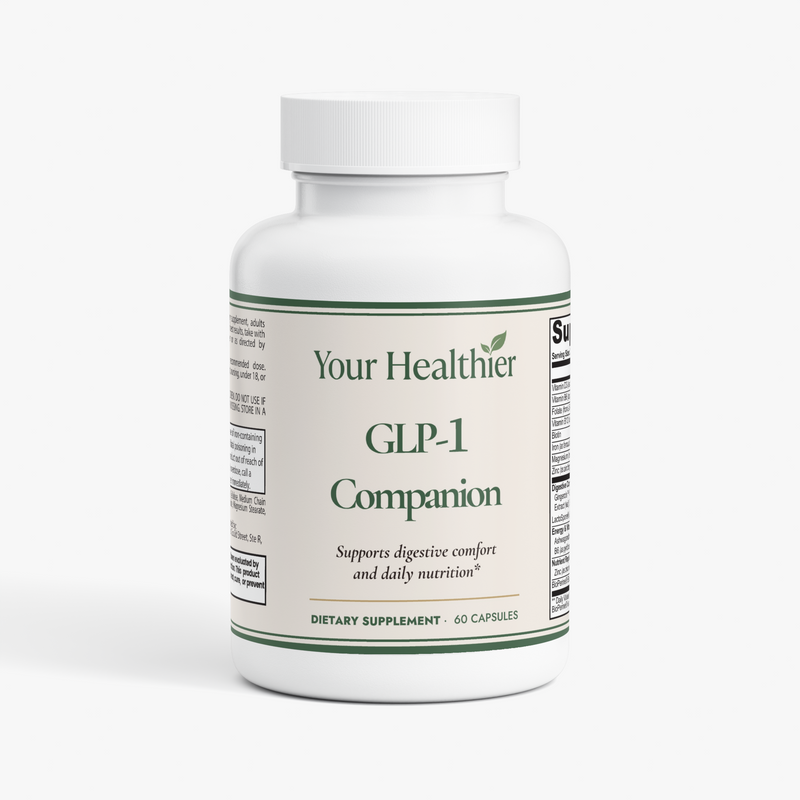
GLP-1 Companion Supplement
Designed for people on GLP-1 medications: B12 (methylcobalamin 525mcg), iron (bisglycinate 18mg), zinc (20mg), magnesium (200mg), vitamin D3, folate (5-MTHF), plus ginger extract, digestive enzymes, and a 6-billion-CFU probiotic — in two capsules. This is not a GLP-1 receptor agonist. It's not a ...
 ✓ Physician Reviewed
This product page has been independently reviewed for medical accuracy, supplement-drug interactions, and dosage safety by Dr. Jill Palko, MD, FACOG — a board-certified physician and MetroHealth & Cleveland Clinic-trained medical doctor with 12+ years of clinical experience. · Last reviewed
Dr. Palko's Statement: For patients already taking GLP-1 medications, this is a great companion supplement. Though these medications work well for weight loss, their mechanism of action can lead to nutrient deficiencies. YourHealthier GLP-1 companion helps provide these nutrients in a well-tolerated and easy-to-take formulation.
 ✓ Pharmacist Reviewed
Drug-supplement interactions and product compatibility on this page have been independently reviewed by Angel Rodriguez, PharmD, MS, BCACP — a board-certified ambulatory care pharmacist and clinical pharmacy specialist with 13+ years of pharmacy experience. · Last reviewed
Dr. Rodriguez's Statement: No significant drug-supplement interactions noted with this formulation. The multivitamin and mineral components (calcium, iron, zinc) may reduce absorption of certain antibiotics and thyroid medications if taken simultaneously — separate by 2–4 hours. The fiber component may slow absorption of co-administered medications. Patients on GLP-1 receptor agonists (semaglutide, tirzepatide, liraglutide) can use this product as intended. Safe to combine with all other YourHealthier products.
 ✓ Nutrition Reviewed
The health claims and ingredient dosing on this page have been independently reviewed for nutritional accuracy, ingredient interactions, and FDA/FTC compliance by Megan DeChatelets, MS, RDN, CDN, IFNCP — a Registered Dietitian Nutritionist and Integrative & Functional Nutrition Certified Practitioner licensed in New York and Texas, with 6+ years of clinical experience. · Last reviewed
Megan's Statement: Don't judge the digestive comfort blend and the micronutrient panel on the same timeline — they're doing different jobs. If nausea eases in the first week or two, that's the ginger and enzymes working, not a sign your iron or B12 status has improved. Ferritin and B12 move on a much slower clock, so I'd recommend a follow-up lab check with your prescriber around the 8–12-week mark if you started this because of documented deficiency, not just because symptoms feel better.
Designed for people on GLP-1 medications: B12 (methylcobalamin 525mcg), iron (bisglycinate 18mg), zinc (20mg), magnesium (200mg), vitamin D3, folate (5-MTHF), plus ginger extract, digestive enzymes, and a 6-billion-CFU probiotic — in two capsules. This is not a GLP-1 receptor agonist. It's not a weight loss supplement. It's a GLP-1 companion supplement built around a specific clinical reality: Urbina et al. (2026, Clinical Obesity) reviewed six studies covering 480,825 adults on GLP-1 medications and found that nutritional deficiencies are common — vitamin D deficiency hit 13.6% at 12 months, iron depletion was frequent (26–30% lower ferritin vs. comparators), and B vitamin deficiencies rose steadily over treatment. The appetite suppression that makes GLP-1 drugs effective at driving weight loss also means you eat less food — and less food means fewer nutrients coming in.*
Every ingredient in this GLP-1 support supplement targets a documented gap or common side effect of GLP-1 therapy. Ginger extract for digestive comfort. DigeZyme® enzymes for the smaller meals your body is now working with. LactoSpore® probiotic for GI balance. And a full micronutrient panel (B12, B6, folate, iron, zinc, magnesium, vitamin D3, biotin) to cover what reduced food intake takes away. This is what a GLP-1 supplement should actually do — support the person taking the medication, not pretend to replace it.*
⚠️ Important: This product is NOT a GLP-1 receptor agonist.
It does not contain semaglutide, tirzepatide, liraglutide, or any prescription drug ingredient. It does not mimic, replace, or replicate the mechanism of GLP-1 medications. This is a dietary supplement formulated to support the nutritional needs of adults who are already taking GLP-1 medications under medical supervision. Always consult your prescribing physician before adding any supplement to your GLP-1 regimen.
Why This GLP-1 Supplement
- 💊 Methylcobalamin B12 (525mcg, 21,875% DV) — the bioactive form, not cyanocobalamin. GLP-1 users showed rising B vitamin deficiency rates over treatment duration (Urbina 2026). High-dose B12 compensates for reduced dietary intake and supports energy production during caloric restriction.
- 🩸 Iron bisglycinate chelate (18mg, 100% DV) — chelated for absorption, gentle on the stomach. The Urbina 2026 review reported GLP-1 users showing 26–30% lower ferritin levels than SGLT2 inhibitor comparators. Bisglycinate is less likely to cause constipation — which matters when GLP-1 side effects already include GI discomfort.
- 🫚 Digestive Comfort Blend (325mg) — Gingerols™ ginger root extract (5% gingerols), peppermint leaf, bromelain, and DigeZyme® multi-enzyme complex. Nausea is the #1 reported GLP-1 side effect. Li et al. (2023, Int J Food Sci Nutr) ran a meta-analysis of systematic reviews confirming ginger's role in supporting digestive comfort. A 2026 pilot trial specifically studied ginger supplementation for GLP-1-related nausea.
- 🦠 LactoSpore® probiotic (6 billion CFU) — Bacillus coagulans MTCC 5856, spore-forming (survives stomach acid). GLP-1 medications alter gastric motility and gut transit time. A shelf-stable GLP-1 probiotic that actually reaches the intestine supports GI balance during treatment.*
- 🔬 Third-party tested — potency, heavy metals, microbials. Certificate of Analysis available on request →
- 🏭 Made in a GMP-certified USA facility. No artificial colors. Every active ingredient is named on the label, with blend totals verified on our third-party COA.
GLP-1 Companion Supplement Facts
| Serving Size | 2 Capsules |
| Servings Per Container | 30 |
| Vitamin D3 (as cholecalciferol) | 50 mcg (250% DV) |
| Vitamin B6 (as pyridoxal 5'-phosphate) | 26 mg (1,529% DV) |
| Folate (from L-5-MTHF-Ca) | 400 mcg DFE (100% DV) |
| Vitamin B12 (as methylcobalamin) | 525 mcg (21,875% DV) |
| Biotin | 5 mcg (17% DV) |
| Iron (as ferrous bisglycinate chelate) | 18 mg (100% DV) |
| Magnesium (as magnesium oxide & citrate) | 200 mg (48% DV) |
| Zinc (as zinc bisglycinate chelate) | 20 mg (182% DV) |
| Digestive Comfort & Soothing Blend | 325 mg ** |
| Gingerols™ Ginger Root Extract (5% gingerols) | |
| Peppermint Leaf Extract | |
| Bromelain Powder (2,400 GDU/g) | |
| DigeZyme® Multi-Enzyme Complex | |
| LactoSpore® (Bacillus coagulans MTCC 5856) | 166 mg (6B CFU) ** |
| Energy & Vitality Complex | 126 mg ** |
| Ashwagandha Extract (root, 5% withanolides) | |
| Nutrient Replenishment Matrix | 22 mg ** |
| BioPerine® Black Pepper Extract (fruit) | 5 mg ** |
** Daily Value not established.
Other Ingredients: Microcrystalline cellulose, medium chain triglycerides (MCT oil), silicon dioxide, magnesium stearate, hypromellose (vegetable capsule).
60 capsules · 30-day supply · Made in USA · GMP-certified facility B12 and iron deficiency — both common on GLP-1 medications — directly contribute to fatigue.
GLP-1 Supplement Dosage: How to Take
Take two (2) capsules daily with food and 6–8 oz of water. Taking with a meal improves absorption of iron, fat-soluble vitamin D3, and the BioPerine® carrier — and keeps the iron gentle on your stomach. If GLP-1-related nausea is worst in the morning, consider taking with your largest meal of the day instead of your first.*
If you're already taking a standalone iron or B12 supplement, review your total daily intake with your healthcare provider before adding this formula. The iron in this product (18mg ferrous bisglycinate) is the full adult DV — combining it with another iron source could exceed recommended intake levels. Full GLP-1 supplement guide →
How much water should I drink on a GLP-1?
More than you would expect, and sipped through the day rather than in large amounts at once. “Hydration matters more than people expect on a GLP-1, partly because reduced intake means less fluid from food, and partly because the fiber and magnesium here work better with adequate water — aim for sipping consistently through the day rather than large amounts at once, since a very full stomach can itself trigger nausea.”
— Megan DeChatelets, MS, RDN, CDN, IFNCP, a Registered Dietitian Nutritionist licensed in New York and Texas
Third-Party Test Results (Certificate of Analysis)
Lot 6040411 · COA issued 07/06/2026 · Independent lab-verified data for potency, heavy metals & microbiology.
Potency Verification
| Active Ingredient | Per 2 Capsules |
|---|---|
| Vitamin B12 (Methylcobalamin) | 525 mcg |
| Iron (Ferrous Bisglycinate Chelate) | 18 mg |
| Magnesium (Oxide & Citrate) | 200 mg |
| Zinc (Bisglycinate Chelate) | 20 mg |
| Vitamin D3 (Cholecalciferol) | 50.05 mcg |
| LactoSpore® (Bacillus coagulans) | 166 mg (6B CFU) |
| Digestive Comfort Blend (Ginger, Peppermint, Bromelain, DigeZyme®) | 325 mg |
| Vitamin B6 (Pyridoxal 5'-Phosphate) | 25.5 mg |
| Folate (L-5-MTHF-Ca) | 400.4 mcg DFE |
| Biotin | 5 mcg |
| Energy & Vitality Complex | 125.9 mg |
| Nutrient Replenishment Matrix | 21.6 mg |
| BioPerine® Black Pepper Extract | 5 mg |
Heavy Metal Testing
| Metal | Limit | Status |
|---|---|---|
| Lead (Pb) | ≤ 6.0 mcg/serving | ✓ Pass |
| Cadmium (Cd) | ≤ 4.1 mcg/serving | ✓ Pass |
| Mercury (Hg) | ≤ 2.0 mcg/serving | ✓ Pass |
| Arsenic (As) | ≤ 10 mcg/serving | ✓ Pass |
Microbiology Testing
| Test | Specification | Result |
|---|---|---|
| Total Plate Count | NMT 500,000 cfu/g | ✓ Pass |
| Yeast & Mold | < 10,000 cfu/g | ✓ Pass |
| E. coli | Absent | ✓ Absent |
| Salmonella | Absent | ✓ Absent |
care@yourhealthier.com
What This GLP-1 Companion Supplement Does
Nutrient Replenishment — The Core Problem This Solves
This GLP-1 (also written as GLP-one or GLP 1) companion supplement addresses the specific nutritional gaps created by GLP-1 receptor agonist medications (such as Ozempic, Wegovy, Mounjaro, and Zepbound). GLP-1 medications work partly by suppressing appetite and slowing gastric emptying. That's the mechanism behind the weight loss. But less food in means fewer vitamins and minerals in — and the research now shows this isn't a theoretical concern. Butsch et al. (2025), the largest of the six studies in the Urbina review, tracked 461,382 GLP-1 users and found 22.4% had a new nutritional deficiency diagnosis within 12 months. Vitamin D was most common (13.6%), followed by nutritional anemia (4%), iron deficiency (3.2%), and B vitamin deficiency (2.6%). In a smaller dietary study (Johnson et al. 2025, Frontiers in Nutrition), 64% of GLP-1 users didn't meet iron intake recommendations, and 72% fell short on calcium.* This GLP-1 supplement covers the five most at-risk nutrients with bioavailable forms: methylcobalamin B12, chelated iron, chelated zinc, 5-MTHF folate, and vitamin D3.
How much protein do I need on a GLP-1?
Front-load it at whichever meal your appetite is strongest, and pair it with resistance training. “Protein is the big one — when you’re eating 20–30% less overall, protein is the macronutrient most worth protecting, since preserving lean mass is the real challenge of GLP-1-driven weight loss. I tell patients to front-load protein at whichever meal their appetite is strongest, rather than spreading it thin across meals they may not finish. Pairing this with resistance training, even just two sessions a week, will have the most significant impact on body composition.”
— Megan DeChatelets, MS, RDN, CDN, IFNCP, a Registered Dietitian Nutritionist licensed in New York and Texas
Digestive Comfort — Managing the #1 Side Effect
Nausea affects up to 20% of semaglutide users and is the most common reason people discontinue treatment (Alhazmi & le Roux 2026, Frontiers in Endocrinology). The ginger root extract in this formula is standardized to 5% gingerols — the bioactive compounds responsible for ginger's digestive effects. Li et al. (2023) conducted a meta-analysis of existing systematic reviews and confirmed ginger's traditional role in supporting digestive comfort. Peppermint supports smooth muscle relaxation in the GI tract. Bromelain and DigeZyme® multi-enzyme complex help break down the smaller meals that GLP-1 users typically eat — because when you're eating 20–30% less food, your body still needs to extract maximum nutrition from what goes in.*
Why does eating slowly matter on a GLP-1?
Give yourself about 20 minutes per meal and stop at the first sign of fullness. “To support digestive comfort, focus on small, slower meals. Eating quickly on a GLP-1 is one of the more common triggers for nausea and reflux — giving yourself 20 minutes to actually finish a meal and stopping at the first sign of fullness rather than usual portion cues, tends to matter as much as the ginger and enzymes themselves.”
— Megan DeChatelets, MS, RDN, CDN, IFNCP, a Registered Dietitian Nutritionist licensed in New York and Texas
What to expect: a realistic timeline
Week 1–2
Digestive comfort support begins
Ginger and peppermint begin supporting digestive comfort from the first dose. The LactoSpore® probiotic starts colonizing — spore-forming strains typically establish within 7–14 days. You may notice less GI discomfort around meals, though individual responses vary.*
Week 2–4
Micronutrient stores begin rebuilding
B12, iron, zinc, and vitamin D begin accumulating. B12 replenishment can take 2–4 weeks to reflect in energy levels. Iron stores (ferritin) rebuild gradually — if you started with depleted ferritin, full restoration can take 3–6 months of consistent supplementation.*
Month 2–6
Sustained nutritional support
Ongoing daily supplementation maintains nutrient levels as your GLP-1 treatment continues. This is when the micronutrient support matters most — long-term GLP-1 use is associated with progressive nutrient depletion (Urbina 2026), and consistent replenishment is the countermeasure.*
*Individual results vary. Describes general patterns observed in published research on the individual ingredients, not specific product claims. Consult your healthcare provider for personalized guidance.
GI Balance — The Probiotic Layer
GLP-1 medications alter gut motility — that's by design, since delayed gastric emptying is part of how they reduce appetite. But slower transit can shift gut bacterial populations. LactoSpore® is a spore-forming Bacillus coagulans strain (MTCC 5856) that survives stomach acid and reaches the intestine intact — unlike most probiotic supplements that are largely destroyed before they arrive. This GLP-1 probiotic layer provides 6 billion CFU per serving and requires no refrigeration, making it practical for daily use alongside medication.*
Stress Adaptation During Weight Loss
Rapid weight loss — the kind GLP-1 medications can produce — is physiologically stressful. Cortisol tends to rise during caloric restriction. The ashwagandha extract in this formula (standardized to 5% withanolides) supports the body's stress response. Chandrasekhar et al. (2012, Indian Journal of Psychological Medicine) studied ashwagandha root extract and found significant reductions in perceived stress markers in adults experiencing chronic stress.* The dose in this formula is part of a multi-ingredient complex, not a standalone therapeutic dose — for a dedicated ashwagandha supplement, see our Ashwagandha KSM-66.
The GLP-1 Nutrient Gap — What the Research Shows
🔬 Study size
480,825
Adults on GLP-1 meds studied
Urbina et al. 2026, Clinical Obesity
📉 Deficiency rate
22.4%
New nutritional deficiency at 12 months
Butsch et al. 2025
🩸 Iron depletion
26–30%
Lower ferritin vs. SGLT2 inhibitor users
Urbina et al. 2026
🍽️ Intake gaps
64%
Of GLP-1 users below iron RDA
Johnson et al. 2025, Frontiers in Nutrition
Sources: PubMed-indexed research cited above. Describes studies on GLP-1 medication users, not specific product claims.
Published Research on GLP-1 Nutritional Support
- Urbina J et al. 2026 (Clinical Obesity) — Narrative review, 6 studies, 480,825 adults. GLP-1RA therapy associated with vitamin D deficiency (13.6% at 12 months), iron depletion (26–30% lower ferritin), and B vitamin deficiencies. (PubMed)
- Butsch WS et al. 2025 (Clinical Obesity / Obesity Pillars) — Retrospective analysis of 461,382 GLP-1 users. 12.7% had new nutritional deficiency by 6 months, 22.4% by 12 months. Muscle loss diagnoses also increased over time.
- Johnson B et al. 2025 (Frontiers in Nutrition) — Cross-sectional dietary study of 69 GLP-1 users. 64% below iron RDA, 72% below calcium RDA, only 1.4% met vitamin D recommendations. (DOI)
- Li Z et al. 2024 (Int J Food Sci Nutr) — Meta-analysis of systematic reviews on ginger for nausea and vomiting. Confirmed ginger's role in supporting digestive comfort across multiple clinical contexts. (PubMed)
- Alhazmi A & le Roux CW. 2026 (Frontiers in Endocrinology) — Review of managing nausea and vomiting in GLP-1-based obesity therapies. (DOI)
- Chandrasekhar K et al. 2012 (Indian J Psychol Med) — RCT, 64 adults with chronic stress. Full-spectrum ashwagandha root extract significantly supported stress adaptation vs. placebo. (PubMed)
- Moiz A et al. 2025 (Annals of Internal Medicine) — Systematic review of RCTs on GLP-1 receptor agonists and co-agonists for weight loss in adults with obesity without diabetes across 12 agents (PubMed)
- Gao P et al. 2025 (American Journal of Translational Research) — PRISMA meta-analysis of 10 RCTs finding ginger supplementation significantly reduced nausea and vomiting (pooled OR 0.41) — supporting the ginger in this formula for GLP-1-related GI upset (PubMed)
All citations describe published research on the individual ingredients or on GLP-1 medication users. They do not constitute claims about this specific product. Full studies available on PubMed.
What Mayo Clinic Says About GLP-1 and Nutrition
Mayo Clinic Health Matters Podcast (March 2026) on GLP-1 weight loss medications — covering side effects, nutritional considerations, muscle loss (muscle preservation is a key concern), and what patients should discuss with their doctors. Mayo Clinic is not affiliated with YourHealthier and does not endorse this product.
YourHealthier GLP-1 Supplement vs Other GLP-1 Supplements
| Feature | YourHealthier | Typical "GLP-1 boosters" |
|---|---|---|
| What it is | Companion for GLP-1 medication users | Often marketed as a natural GLP-1 alternative |
| B12 form | Methylcobalamin (bioactive) | Cyanocobalamin or missing |
| Iron form | Bisglycinate chelate (gentle, absorbable) | Ferrous sulfate (harsh) or missing |
| Digestive support | Ginger + peppermint + enzymes + probiotic | Usually fiber or berberine only |
| Probiotic strain | LactoSpore® (spore-forming, 6B CFU) | Non-spore strains or missing |
| Research basis | Targets documented GLP-1 nutrient gaps (Urbina 2026) | Vague "metabolic support" claims |
| Lab testing | Third-party tested, COA on request | "Third-party tested" with no COA shared |
Who Should Take This GLP-1 Companion Supplement
If you're currently on a GLP-1 medication — semaglutide, tirzepatide, liraglutide, dulaglutide, or any GLP-1 receptor agonist — and you're concerned about nutrient gaps from reduced food intake, this is built for you. The formula addresses the specific deficiencies that research has identified in GLP-1 users: vitamin D, iron, B vitamins, zinc, and magnesium. The digestive comfort blend targets the most common GLP-1 side effects. If you're experiencing nausea, bloating, or GI discomfort during dose titration, the ginger, peppermint, and enzyme components may help.*
Also relevant if you're considering GLP-1 therapy and want to establish a nutrient baseline first — starting supplementation before or during early titration means you're replenishing from the start, not playing catch-up after depletion has already occurred.
Who Should NOT Take This GLP-1 Supplement
- ❌ Anyone looking for a GLP-1 alternative or weight loss pill — this is not that. This product does not contain GLP-1 receptor agonists and does not promote weight loss. If you're looking for a natural GLP-1 alternative, this is the wrong product. This is a companion supplement for people already on prescription GLP-1 medications.
- ❌ Iron-overload conditions (hemochromatosis) — this product contains 18mg iron per serving. Do not take if you have a condition that causes iron accumulation.
- ❌ Under 18 — not intended for pediatric use.
- ❌ Pregnant or breastfeeding — the iron and vitamin content requires physician guidance during pregnancy.
- ❌ Anyone not consulting their prescribing physician — if you're on a GLP-1 medication, your doctor should know about every supplement you add. Some ingredients (iron, magnesium) can interact with medication absorption timing.
- ❌ Thyroid conditions — this formula contains ashwagandha, which has known effects on thyroid hormone levels. If you have hypothyroidism, hyperthyroidism, or take thyroid medication, check with your doctor before starting.
Important timing note: take this GLP-1 supplement at least 2 hours apart from your GLP-1 injection or oral medication. GLP-1 drugs slow gastric emptying, which can alter absorption of oral supplements. Spacing them helps both the medication and the supplement work as intended. Discuss timing with your prescribing physician.
GLP-1 Supplement Side Effects
Iron supplements can cause constipation, dark stools, or mild stomach upset in some people. The bisglycinate chelate form we use is gentler than ferrous sulfate, but if you have a sensitive stomach, start with one capsule for the first week and increase to two. The ginger extract may cause mild warmth in the stomach — this is normal and usually subsides quickly. The probiotic (LactoSpore®) can occasionally cause temporary gas or bloating as your gut microbiome adjusts during the first few days. If you experience any adverse effects, stop use and consult your healthcare provider.*
Three things are worth knowing if you plan to take this for months rather than weeks. Zinc at 20 mg daily over a long period can lower copper levels, so mention ongoing use to your doctor and ask about checking copper if you stay on it. The B6 here (26 mg as P5P) sits well under the 100 mg upper limit, but prolonged high-dose B6 has been associated with tingling or numbness in the hands and feet in some people. Do not combine this with another B6-containing supplement, and stop use if you notice those symptoms. The peppermint in the digestive blend relaxes the lower esophageal sphincter, which can worsen acid reflux. If reflux is already an issue for you on your medication, talk to your provider before starting.*
GLP-1 Supplement Stacks: What Pairs Well
- Berberine 800mg — If you were on berberine before starting GLP-1 therapy and want to continue AMPK-pathway metabolic support. Note: discuss with your doctor, as both berberine and GLP-1 drugs affect blood sugar pathways. Details →
- Magnesium Glycinate — This formula contains 200mg magnesium (oxide + citrate). If sleep is a priority, adding 275mg bisglycinate at bedtime fills the gap — different form, different purpose. Details →
- Ashwagandha KSM-66 — This formula includes a small ashwagandha component. For a full clinical dose of KSM-66 (600mg), the standalone product delivers more. Details →
- Creatine Hydration Powder — GLP-1-associated weight loss includes lean mass. Creatine is the most evidence-backed supplement for supporting lean muscle during caloric restriction (Kreider 2017, ISSN). A strong pairing if you're training during GLP-1 treatment.
GLP-1 Companion Supplement FAQ
Is this a natural GLP-1 supplement or alternative?
No. This is not a natural GLP-1 supplement, a GLP-1 booster, or an over-the-counter GLP-1 alternative. It does not stimulate GLP-1 receptors. It does not promote weight loss. It is a companion supplement — designed to replenish nutrients that GLP-1 medication users tend to lose due to reduced food intake. If you're looking for a natural glp-1 alternative, consult your physician about evidence-based options.
What GLP-1 side effects does this supplement address?
The digestive comfort blend (ginger, peppermint, enzymes, probiotic) targets the most reported GLP-1 side effects: nausea, bloating, constipation, and general GI discomfort. Nausea affects up to 20% of semaglutide users (Alhazmi 2026). The micronutrient panel (B12, iron, zinc, D3, folate) addresses the nutrient depletion that comes with reduced caloric intake during GLP-1 therapy.*
Does GLP-1 cause hair loss?
GLP-1 hair loss is associated with rapid weight loss (telogen effluvium), not with the GLP-1 drug mechanism itself. When your body loses weight quickly, some hair follicles shift to a resting phase and shed. Nutrient deficiencies — particularly iron, zinc, and vitamin D — can worsen this. This formula covers all three at meaningful doses. If you're experiencing hair thinning during GLP-1 treatment, bring it up with your doctor and consider having your ferritin and vitamin D levels tested. Full guide →
Can I take this without being on a GLP-1 medication?
Technically yes — every ingredient is a standard dietary supplement ingredient. But the formula was designed around the specific nutrient gaps and side effects of GLP-1 therapy. If you're not on a GLP-1, there are better-targeted options for general nutritional support. This is built for a specific use case.
What's the best GLP-1 supplement to take?
The best GLP-1 supplement is one that addresses documented nutritional gaps — not one that claims to "boost" or "activate" GLP-1. Look for: bioavailable forms (methylcobalamin, chelated iron, 5-MTHF folate), digestive comfort ingredients backed by research (ginger, probiotics), third-party testing with accessible COA, and clear labeling that says exactly what's in it. Avoid products that imply they can replace prescription GLP-1 medications — they can't.
Does this interact with semaglutide or tirzepatide?
No known direct interactions between these supplement ingredients and GLP-1 receptor agonists. However, GLP-1 drugs slow gastric emptying, which can affect how quickly oral supplements are absorbed. Space this supplement at least 2 hours from your medication. Iron and magnesium can interfere with the absorption of some medications — always inform your prescribing physician. This is general information, not medical advice.
Why methylcobalamin instead of cyanocobalamin?
Methylcobalamin is the bioactive form of B12 — your body can use it directly without conversion. Cyanocobalamin (the cheaper form in most supplements) needs to be converted to methylcobalamin before it's usable, and that conversion can be less efficient in some people. When B12 intake is already compromised by reduced food consumption on GLP-1, using the form that requires the fewest conversion steps makes sense.
Why iron bisglycinate instead of ferrous sulfate?
Ferrous sulfate is cheap but notorious for causing constipation, nausea, and stomach upset. When you're already dealing with GLP-1 GI side effects, adding a harsh iron source makes the experience worse. Bisglycinate chelate is bound to the amino acid glycine — it's better tolerated and has comparable absorption. It costs more, which is why most budget GLP-1 vitamins use sulfate or skip iron entirely.
Should I take iron with coffee or tea on a GLP-1?
No — keep them at least an hour apart, and take iron with a vitamin-C source instead. “To get the most out of iron supplementation, a small glass of orange juice or another vitamin-C-rich food alongside your dose meaningfully improves absorption — and try to keep coffee or tea at least an hour away from it, since the tannins bind iron and blunt uptake.”
— Megan DeChatelets, MS, RDN, CDN, IFNCP, a Registered Dietitian Nutritionist licensed in New York and Texas
How does this compare to a regular multivitamin?
A generic multivitamin gives you broad coverage at low doses across dozens of nutrients. This gives you targeted, higher-dose coverage of the specific nutrients GLP-1 users are most likely to be deficient in (Urbina 2026), plus a digestive comfort layer that no multivitamin includes. It's less broad and more precise — designed for a specific situation, not for everyone.
Does this contain thiamine (vitamin B1)?
No. This formula contains B12, B6, folate, and biotin, but not thiamine. That is worth saying plainly, because the same review this page cites (Urbina 2026) found thiamine and cobalamin deficits increase over time on GLP-1 therapy, and that in patients with rapid weight loss, persistent vomiting, or very poor oral intake, suspected thiamine deficiency is a medical urgency. Treatment should begin immediately without waiting for laboratory confirmation, since delays can result in irreversible neurologic injury. If you are vomiting persistently or barely eating on a GLP-1 medication, contact your prescriber right away rather than relying on any supplement, including this one.
Following a GLP-1 diet plan (also searched as glp1 diet) means prioritizing nutrient-dense foods to compensate for reduced caloric intake. This supplement fills the gaps that even a well-planned GLP-1 diet may leave.
Learn More About GLP-1 Supplements- GLP-1 supplement guide: what the research actually shows
- What is GLP-1? How GLP-1 receptor agonists work
- GLP-1 side effects: what to expect and how to manage
- GLP-1 and hair loss: causes, prevention, and what helps
- Natural GLP-1: foods and compounds that support GLP-1
⚠️ WARNING: Contains Iron
Accidental overdose of iron-containing products is a leading cause of fatal poisoning in children under 6. Keep this product out of reach of children. In case of accidental overdose, call a doctor or poison control center immediately.
⚠️ *These statements have not been evaluated by the Food and Drug Administration. This product is not intended to diagnose, treat, cure, or prevent any disease. This product is NOT a GLP-1 receptor agonist and does not contain any prescription drug ingredients. It does not replace GLP-1 medications. Consult your prescribing physician before starting any supplement while on GLP-1 therapy. · Editorial Policy · Lab Results
Drug Interaction FAQ
PharmD ReviewedDoes the GLP-1 Companion Supplement interact with semaglutide or tirzepatide?
No significant drug-supplement interactions have been identified between the ingredients in this formulation and GLP-1 receptor agonists. However, GLP-1 drugs slow gastric emptying, which can affect supplement absorption. Space this supplement at least 2 hours from your GLP-1 medication.
Can I take the GLP-1 Companion with antibiotics or thyroid medications?
The multivitamin component contains minerals (calcium, iron, zinc) that may reduce absorption of certain antibiotics (fluoroquinolones, tetracyclines) and thyroid medications (levothyroxine) if taken simultaneously. Separate by 2-4 hours to avoid absorption interference.
Is the GLP-1 Companion safe with other YourHealthier products?
This supplement is safe to combine with all other YourHealthier products. For optimal mineral absorption, consider spacing from Magnesium Glycinate by 1-2 hours, though no safety conflict exists.
Reviewed by Angel Rodriguez, PharmD, MS, BCACP · August 2026 · This is general information, not medical advice.
Taking a Prescription Medication or Other Supplements?
Not sure if this product is safe to combine with your current medication or supplement regimen? Email us at care@yourhealthier.com — our pharmacist (PharmD, BCACP) and physician (MD, FACOG) reviewers can provide general safety guidance on potential interactions. We respond within 48 hours. This service is completely free whether or not you purchase our product — because your health matters more than any sale.
This is not medical advice and does not replace consultation with your prescribing physician. Our reviewers provide general supplement safety information only. Always consult your doctor before adding a supplement to your regimen.
Supplement Facts
Usage
Backed by Peer-Reviewed Research
The clinical evidence cited in this product's structured data is fully traceable to peer-reviewed publications. Each study below is independently verifiable on PubMed.
⚕ Research summaries describe what researchers observed in specific study populations. They are not product claims and do not predict individual outcomes. These statements have not been evaluated by the FDA. This product is not intended to diagnose, treat, cure, or prevent any disease.
Cited research describes effects observed in specific study populations under specific protocols. Individual results vary. Citation of clinical research does not constitute disease claims. Editorial policy
Every batch is third-party tested by an independent laboratory against the specifications below. Figures shown are our product specifications and acceptance limits — request the lot-specific Certificate of Analysis for your batch's measured results.